
In the first of a series of articles, Dazed & Confused technology editor Chris Hatherill looks at how supercomputer design has come full circle…
Once upon a time, supercomputers seemed to be as much about interior design as they were about raw computing power. The massive machines of the early ’60s now stand like statement pieces, with early models like the IBM 7030 housed in galleries like the Musée des Arts et Metiers in Paris. The CDC 6600, which held the record for fastest supercomputer throughout most of the ’60s, came built into its own desk. Minimalist and matte black with the most basic of keyboards, it’s like 2001: A Space Odyssey meets your local library.
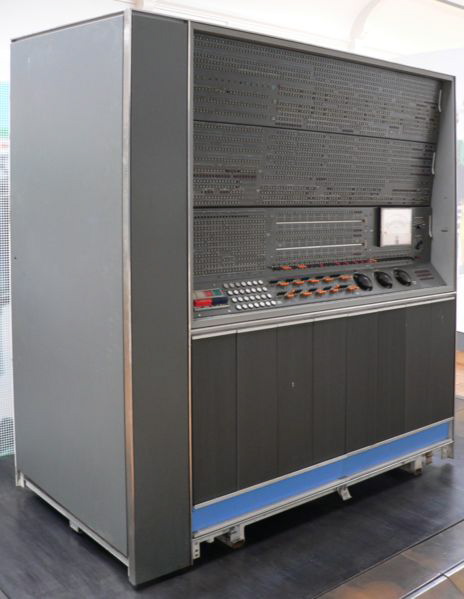
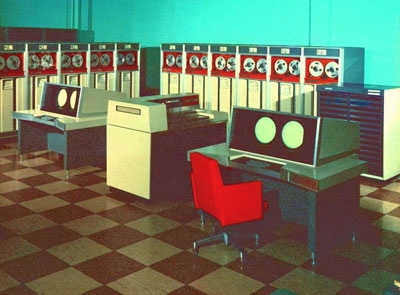
The man who built it, Seymour Cray, went on to become synonymous with supercomputing, first working for CDC before starting the legendary company that bears his name. His stand-alone, almost alien-like artefacts from the ’70s and ’80s hark back to a time when computing at this level still had sci-fi connotations. In a world before gadgets became a designer accessory, his creations were beautiful – perhaps even unnecessarily overdesigned considering how few people saw them.
Stark and pristine, his machines seem to reflect the trends of the day. The disco-tastic Cray-1S – with vertical purple circuit towers and a black clad freon cooling system – would not have looked out of place a David Bowie afterparty, or covered in white lines at Studio 54. The red and black Cray-2 and Y-MP models, meanwhile, brought supercomputing into the ’80s with Blade Runner looks perfectly suited to a minimalist yuppie flat, complete with venetian blinds and an Athena poster on the wall. Though a Cray made a cameo in the early ’90s hacker thriller Sneakers, only giant organisations like NASA could afford them.
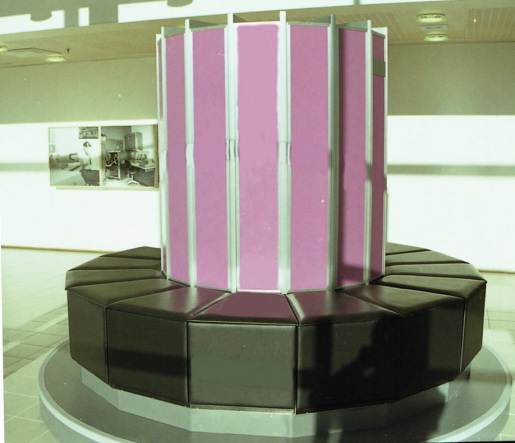
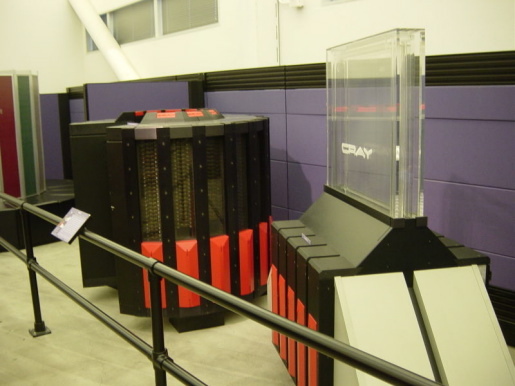
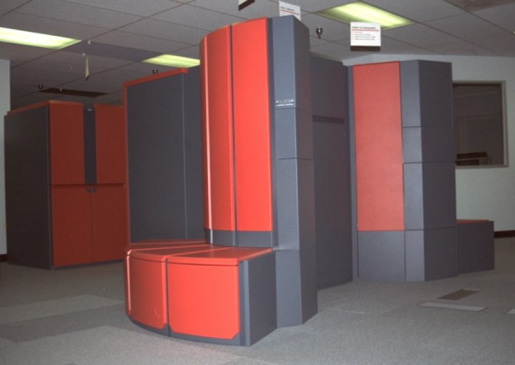
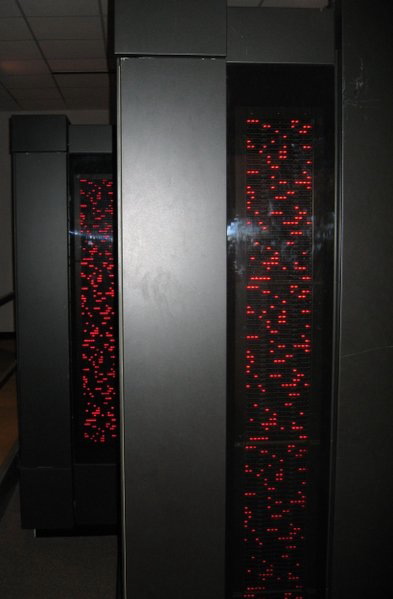
At the start of the ’90s, the NSA’s FROSTBURG machine updated the look for the rave generation, with red LED lights resembling some Daft Punk creation. As the decade progressed, such machines fell by the wayside as supercomputers became more about large numbers of computers running calculations simultaneously. Though possessing a certain beauty, a dozen aisles of quiet humming server technology in an air-conditioned basement can hardly be classed as art.
The era of the stylish supercomputer wasn’t over yet though. After trailing behind cheaper PC’s in terms of raw computing power, Apple wed high performance and sleek styling with the groundbreaking G4, launched amid much fanfare as a ‘weapon’ on account of its ability to perform 1billion calculations per second. Apple was even initially asked by the US Government to restrict sales to blacklisted countries, which the company used to its advantage with the famous ‘Tank’ ad.
[http://www.youtube.com/watch?v=gzxz3k2zQJI]
The success of stylish gadgetry like the Apple Mac and the Sony PS2 proved that consumers wanted both high-end performance and sleek-looking machines, a trend that today has led to preponderance of shiny black and white boxes in the shops – many of which would have once ranked as supercomputers. Today, machines that would once have dominated the room now fit comfortably in your pocket, on your desk or under your Bravia – and looks are just as important as processing power. The PS3 is the latest example – with its groundbreaking Cell processor, clocked at 3.2 GHz, it would class as a supercomputer if only time would stand still. The gap between ‘supercomputers’ and your desktop is reckoned to be only about fifteen years – meaning the supercomputers of today will be the playthings of tomorrow. What they’ll look like, though, is anyone’s guess.
Next time:
The Grid, Folding@Home and the power of sharing: A look at how distributed computing could turn your PS3 into the most powerful computer on earth.
fun article
Comment by Brian — Oct 15, 2007 @ 6:38 pm
love this. very interesting. more plz
Comment by belfast steps — Oct 15, 2007 @ 6:49 pm
Being there would be like stepping foot in Tron *drooools*
Comment by JohnSketch — Oct 15, 2007 @ 7:09 pm
The continuing technological trends allowing 64-bit computing / Quad Core computing in the home is a testament to the speed of which this industry has developed.
Interestingly the speed wars have been replaced by cores and performance, and we are seeing even slimmer versions of items that aren’t even that old (PSP!!)
Even though things like the PS3 / PSP / Ipods etc are styled towards todays fashions, it is nice to see as much, if not more, was put into the computers of yesteryear!
Comment by The Sheriff — Oct 15, 2007 @ 8:48 pm
The CDC 6600! *smirks and sniggers* sorry i’m a b3tard! was only chatting about the ps3 and quasi-supercomputers last night as it goes. ps3 = 1 PFLOP and rising on f@h, nothing beats it for embarrassingly parallel processing.
i had a G4 at launch it cost me a pretty penny, inside was a notice from the us defence department stating that it could not be sold to ’sensitve’ countries. wish i’d have kept it. the note that is, my mother ended up with the G4 after a few years and now i believe it lives in her loft.
and everyone knows that the more flashing leds etc a computer has the more powerful it is, my modem and router has 20 green ones in all = very powerful, wereas teh x360 has 3 red flashing ones = fail -haha-
Comment by mobiletone — Oct 15, 2007 @ 9:08 pm
Got a kick out of that Apple commercial the first time I saw that on TV.
Comment by Josh — Oct 16, 2007 @ 1:49 am
it’s nice to see a bit of worthy journalism on this site. Hope you all enjoy it.
Comment by Emily — Oct 16, 2007 @ 11:02 am
RSS feed for comments on this post. TrackBack URI
Leave a comment